Comprehensive Insights into MIP LED Technology: Advancements, Applications, and Industry Trends
In the rapidly evolving landscape of display technology, Micro LED and Mini LED (collectively referenced under the umbrella of MIP LED in certain industry contexts) have emerged as groundbreaking innovations, setting new benchmarks for brightness, energy efficiency, and visual performance. As a professional LED display engineer with extensive experience in designing sunlight-readable high-brightness LED displays, this article delves deeply into the nuances of MIP LED technology, examining its principles, practical applications, inherent advantages, common challenges, and the latest industry trends shaping the future of digital display solutions.
Introduction to MIP LED Technology
MIP LED, often interpreted as an acronym standing for Micro and Mini LED Pixel technology, represents a next-generation LED display segment leveraging significantly reduced LED chip sizes and enhanced integration techniques. The technology sits at the intersection of micro-fabrication advancements and display engineering, allowing for dense pixel arrays with superior brightness, contrast, color accuracy, and lifespan compared to traditional LED and OLED displays.
Understanding the technical foundations of MIP LED requires differentiating between Micro LED and Mini LED components, which, although similar in function, vary primarily in LED chip dimensions and pixel densities:
- Micro LED: Characterized by LED chips typically less than 50 micrometers in size. Known for self-emissive pixels offering high contrast ratios, Micro LED displays enable true black levels and vibrant color reproduction.
- Mini LED: Utilizes slightly larger LEDs, generally ranging between 100 to 200 micrometers. Primarily used as a backlighting system for LCD panels, Mini LEDs dramatically improve local dimming capabilities, leading to enhanced contrast and brightness.
The integration of Micro and Mini LED approaches under MIP LED systems combines their strengths, facilitating high pixel density and brightness levels optimal for sunlight-readable displays.
Technical Deep Dive: Principles and Components of MIP LED Displays
MIP LED displays are composed of several key structural and functional layers, optimized for brightness and durability under outdoor conditions:
- LED Chips: These semiconductor diodes emit light when electrically biased. Micro LEDs, because of their diminutive size and high efficiency gallium nitride (GaN) or gallium arsenide (GaAs) based epitaxial wafers, enable high brightness with low energy consumption.
- Substrate and Interconnects: Advanced substrate materials such as sapphire or silicon facilitate fine-pitch integration, alongside ultra-fine pitch interconnect technology, allowing pixel-to-pixel distances as low as 30 micrometers.
- Driver Integrated Circuits (ICs): Efficient driving circuitry is crucial to manage millions of LEDs, with dynamic power allocation and thermal management strategies incorporated to optimize lifespan and stability.
- Encapsulation and Protective Layers: Specialized coatings and mechanical protection ensure environmental resilience against UV exposure, moisture, and physical abrasion—a critical factor for outdoor sunlight-readable applications.
State-of-the-art manufacturing methods, including mass transfer technology and wafer-level packaging, have significantly reduced production costs and defects, which historically limited Micro LED scalability.
Practical Applications of MIP LED Displays
MIP LED technology finds broad adoption across multiple industries due to its exceptional performance in bright ambient environments and ultra-high-resolution display capabilities:
1. Outdoor Digital Billboards and Advertising
The primary application driving MIP LED proliferation is the outdoor advertising market, where high brightness, color consistency, and durability under direct sunlight are non-negotiable requirements. MIP LED displays deliver peak brightness levels exceeding 5,000 nits, enabling clear visibility without viewer eye strain, even in direct sunlight conditions exceeding 10,000 lux.
2. Aviation and Transportation Signage
Hubs like airports and train stations benefit from MIP LED displays’ high contrast and clarity, enhancing real-time information dissemination under wide viewing angle and varying ambient lighting conditions.
3. Stadium and Event Screens
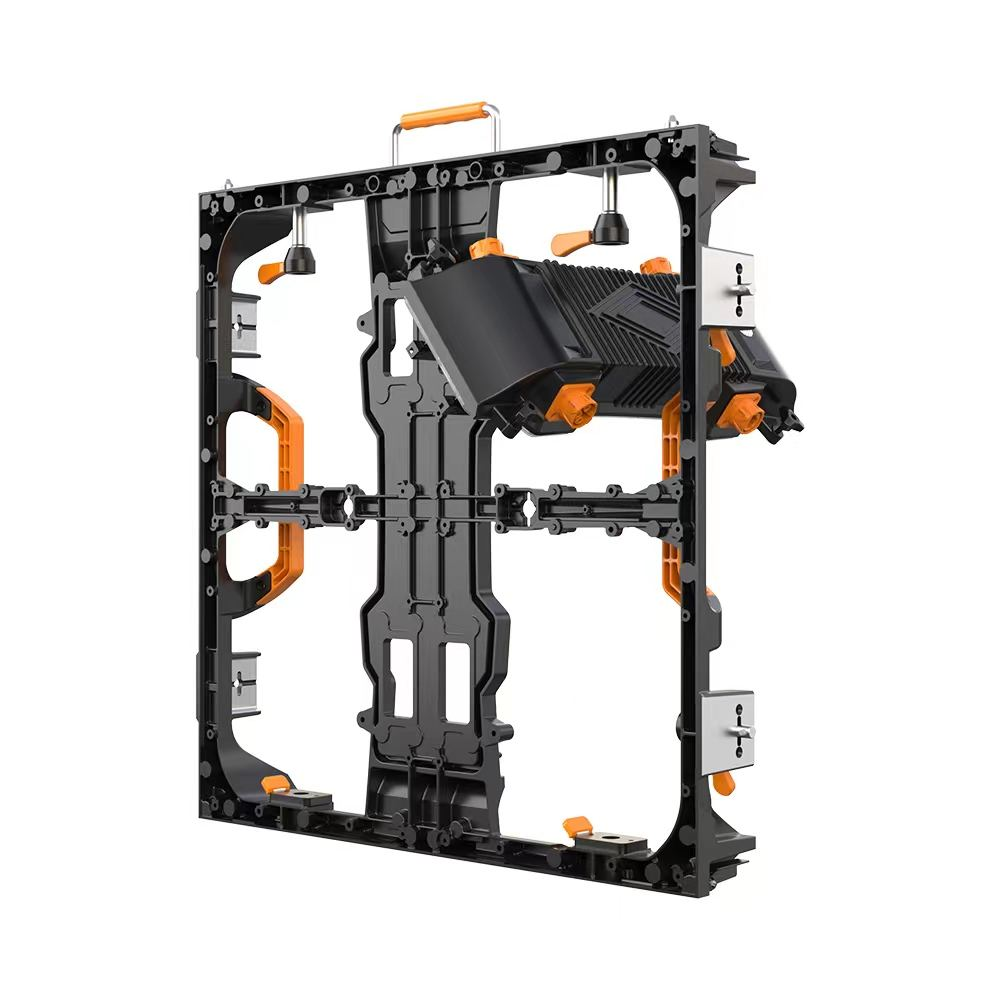
Large-format stadium screens demand sunlight readability, robustness against weather elements, and smooth video playback. MIP LED technology satisfies these needs by offering modular designs for seamless large-area displays and high refresh rates for motion clarity.
4. Broadcast and Virtual Production
In studio environments, MIP LEDs enable dynamic backdrops with precise color fidelity and low latency, critical for augmented reality and virtual sets.
5. Automotive Head-Up Displays (HUDs)
Emerging automotive HUD applications leverage miniaturized LED arrays for projecting vital data directly onto vehicle windshields, requiring ultra-high brightness and compact form factors intrinsic to MIP LED tech.
Advantages of MIP LED Displays
MIP LED exhibits numerous benefits over OLED and traditional LCD technologies:
- Exceptional Brightness and Sunlight Readability: Micro and Mini LEDs deliver brightness levels surpassing 5,000 nits, outperforming OLEDs which max out around 1,000-1,500 nits, making MIP LED displays ideal for outdoor direct sunlight exposure.
- Superior Energy Efficiency: Because MIP LEDs are self-emissive and more efficient in converting electrical energy to light, they consume less power compared to LCDs with backlighting and OLEDs, significantly extending operational lifetimes in battery-powered devices.
- Increased Longevity and Durability: Unlike OLEDs, which suffer from burn-in and organic material degradation, MIP LEDs use inorganic materials (GaN, GaAs), offering longer lifespan (>100,000 hours) and stability under harsh environmental conditions.
- High Refresh Rates and Fast Response Times: MIP LEDs enable refresh rates exceeding 240Hz with microsecond response times, critical for smooth video playback, gaming, and mission-critical applications.
- Wide Color Gamut and High Contrast Ratios: Capable of covering over 100% of the Rec. 2020 color space with contrast ratios exceeding 10,000:1 due to true pixel-level light emission control.
- Scalability and Flexibility: Modular MIP LED panels can be scaled to arbitrary sizes without loss of resolution, with flexible substrates enabling curved or foldable displays.
Common Challenges and Industry Solutions
Despite the promising advantages, MIP LED technology faces challenges that manufacturers and engineers address through ongoing research and innovation:
Mass Transfer and Manufacturing Complexity
The precise placement of millions of tiny Micro LED chips on a substrate—the so-called mass transfer process—requires unprecedented accuracy and speed. Early systems suffered from low yields and high costs. However, recent advances in pick-and-place robotics, laser-induced forward transfer (LIFT), and wafer bonding have dramatically improved throughput.
Thermal Management
Operating at high brightness levels generates significant heat. Continuous heat dissipation mechanisms, such as embedded heat sinks, thermal interface materials, and optimized circuit designs, are essential to maintain reliability and prevent color shift.
Driving and Calibration Complexities
Ensuring uniform brightness and color across millions of LEDs requires advanced driving ICs with per-pixel calibration and feedback mechanisms. Dynamic pixel mapping and compensation algorithms are increasingly integrated into display controllers.
Cost Optimization
While manufacturing costs are declining, especially for Mini LEDs, Micro LEDs remain more expensive compared to OLED or LCD counterparts. Industry standards, economies of scale, and investment in automation are gradually narrowing this cost gap.
Latest Trends and Future Outlook
The MIP LED industry continues to evolve rapidly, driven by key technological and market trends:
1. Integration with Artificial Intelligence and IoT
Smart MIP LED displays equipped with AI-powered content optimization, ambient light sensing, and predictive maintenance promise enhanced user experiences and operational efficiency.
2. Expansion into Consumer Electronics
Major manufacturers are targeting smartphones, tablets, and wearable devices, where MIP LEDs can deliver superior brightness and longer battery life with thinner form factors. For example, Sony and Samsung have announced micro-LED-based TVs and monitors with ultra-high resolutions.
3. Automotive and Augmented Reality
As autonomous vehicle displays and AR glasses require compact, ultra-bright, and low-latency displays, MIP LEDs offer a promising platform for next-generation HMI (human-machine interface) systems.
4. Improved Manufacturing Ecosystems
Collaborative industry efforts, including supply chain standardizations, wafer-scale bonding enhancements, and open-source IC design, are accelerating the widespread adoption of MIP LEDs.
Conclusion
MIP LED technology represents a milestone in LED display innovation, offering unmatched brightness, durability, and efficiency for sunlight-readable applications. By seamlessly combining Micro and Mini LED capabilities, MIP LEDs empower a broad spectrum of industries—from outdoor advertising and transportation to consumer electronics and automotive HUDs. Ongoing advancements in manufacturing, thermal management, and driving electronics continue to expand the horizons of what MIP LED displays can achieve.
From a professional standpoint, leveraging MIP LED technology requires a comprehensive understanding of semiconductor physics, microfabrication, optoelectronic integration, and system engineering. As global markets increasingly demand displays that perform reliably under diverse ambient lighting conditions, MIP LED stands as the definitive technology poised to meet these challenges, ensuring both superior user experience and operational dependability.
References and Further Reading
- MicroLED – Wikipedia
- Micro LED and Mini LED Explained – OLED-Info
- Display Daily – Micro LEDs, Mini LEDs, and The Future of Displays
- International Electrotechnical Commission (IEC) Standard 62717: LED Modules for General Lighting
- 2023 Market Analysis Report: Micro and Mini LED Display Technologies, Yole Développement
- Case Study: Samsung’s Micro LED Cathedral Screen in Commerce, Samsung Display
For any manufacturer, designer, or engineer entering the MIP LED domain, maintaining a strategic focus on integrating the latest materials science, pixel control algorithms, and thermal solutions will be pivotal to harness the full capabilities of this transformative display technology.